9. Curriculum Design
1. understand major curriculum and design models and interpret school district curricula;
2. initiate needs analysis and plan and implement with staff a framework for instruction;
3. align curriculum and outcomes;
4. monitor social and technological developments as these developments affect curriculum, including youth service programs;
5. solicit input from families, parents, the public, and the business community;
6. adjust curriculum content as needed and conditions change.
Matching school needs with a method to meet those needs is an important step in moving forward in meeting the goals of the school’s mission. Generally, large districts adopt one or more models for schools to follow in the quest for assisting their students meet learning goals. As important as selecting or following a specific model is, implementing systems within the school to allow for change is even more so. In times when no major change will be implemented, having a system for reflecting and improving on success is important for continued growth and progress toward meeting goals. Creating capacity for change and continuous improvement is important in facilitation of the change and improvement.
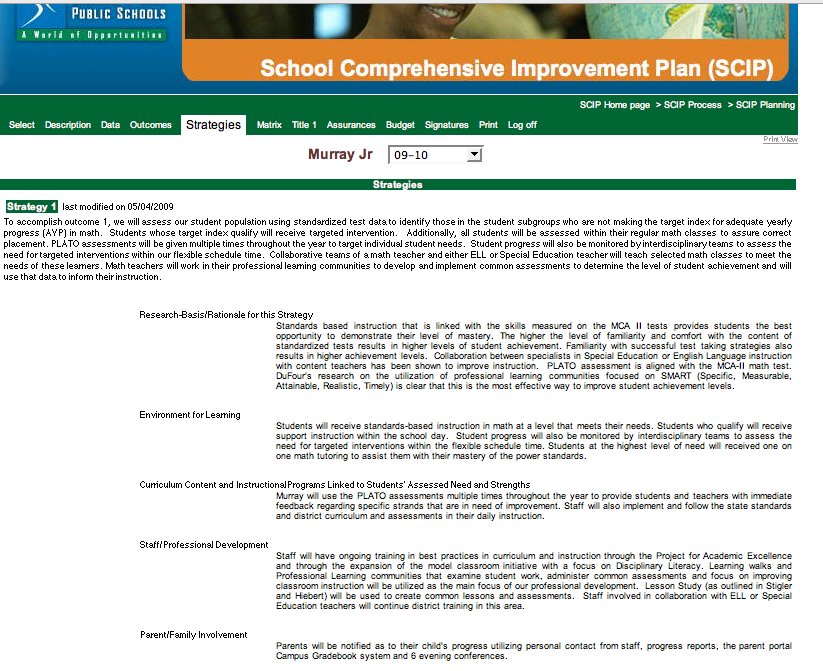
In Saint Paul, we have been using Disciplinary Literacy, which is a focused, apprenticeship model where students carry out learning history as historians, science as scientists, etc. The model is based on the University of Pittsburgh’s Principles of Learning, which is a step outside of the comfort zone for many teachers. The model is extremely student and standards focused, asks for deeper understanding and demonstration of learning on the part of the learner, and that students share and defend their understanding verbally with each other. Many teachers are uncomfortable with putting this level of control for the learning into the hands of the learner. Fortunately, at the same time as this model was being brought into my current building, we also began implementing Professional Learning Communities (PLCs). This model is perfect for both implementing a new curriculum design model and maintaining progress toward learning goals such as improving performance on State assessments. The group selects a specific goal to look at and shares the work of improving the overall education experience for all students. There are many specific methods to do this, including examining student work, either with or to create rubrics; carrying out Japanese-style Lesson Studies; and deconstructing assessment data to look at strengths and areas for improvement. But the bottom line for a PLC is improvement of student achievement through a focus on student work.
As I look at my past successes in facilitating PLCs, I look forward to supporting others in their endeavors in facilitating this process. The quality of a PLC depends on many things: a clear vision and direction, open honest communication about what the group is doing, a large amount of trust as they move forward in looking at student work, and possibly most importantly, administrative support. I will give the groups leeway to select their goal(s) and provide time and materials for their work, including covering classes so teachers can observe one another while teaching. Once the PLC process is running, I will visit them often to gain a greater understanding of each of them for the purposes of guiding and finding progress to share and celebrate, with permission, with the rest of the staff. My expectations will be fairly high, but more procedural than results oriented: teachers will need to meet on a regular schedule, have an agenda and minutes that are forwarded to me, focus their energy on student work, and be open to administrators taking part in the PLC from time to time. If those expectations are met, we will have both results and systems set in place to ensure a capacity for change and improvement.
1. understand major curriculum and design models and interpret school district curricula;
2. initiate needs analysis and plan and implement with staff a framework for instruction;
3. align curriculum and outcomes;
4. monitor social and technological developments as these developments affect curriculum, including youth service programs;
5. solicit input from families, parents, the public, and the business community;
6. adjust curriculum content as needed and conditions change.
Matching school needs with a method to meet those needs is an important step in moving forward in meeting the goals of the school’s mission. Generally, large districts adopt one or more models for schools to follow in the quest for assisting their students meet learning goals. As important as selecting or following a specific model is, implementing systems within the school to allow for change is even more so. In times when no major change will be implemented, having a system for reflecting and improving on success is important for continued growth and progress toward meeting goals. Creating capacity for change and continuous improvement is important in facilitation of the change and improvement.
In Saint Paul, we have been using Disciplinary Literacy, which is a focused, apprenticeship model where students carry out learning history as historians, science as scientists, etc. The model is based on the University of Pittsburgh’s Principles of Learning, which is a step outside of the comfort zone for many teachers. The model is extremely student and standards focused, asks for deeper understanding and demonstration of learning on the part of the learner, and that students share and defend their understanding verbally with each other. Many teachers are uncomfortable with putting this level of control for the learning into the hands of the learner. Fortunately, at the same time as this model was being brought into my current building, we also began implementing Professional Learning Communities (PLCs). This model is perfect for both implementing a new curriculum design model and maintaining progress toward learning goals such as improving performance on State assessments. The group selects a specific goal to look at and shares the work of improving the overall education experience for all students. There are many specific methods to do this, including examining student work, either with or to create rubrics; carrying out Japanese-style Lesson Studies; and deconstructing assessment data to look at strengths and areas for improvement. But the bottom line for a PLC is improvement of student achievement through a focus on student work.
As I look at my past successes in facilitating PLCs, I look forward to supporting others in their endeavors in facilitating this process. The quality of a PLC depends on many things: a clear vision and direction, open honest communication about what the group is doing, a large amount of trust as they move forward in looking at student work, and possibly most importantly, administrative support. I will give the groups leeway to select their goal(s) and provide time and materials for their work, including covering classes so teachers can observe one another while teaching. Once the PLC process is running, I will visit them often to gain a greater understanding of each of them for the purposes of guiding and finding progress to share and celebrate, with permission, with the rest of the staff. My expectations will be fairly high, but more procedural than results oriented: teachers will need to meet on a regular schedule, have an agenda and minutes that are forwarded to me, focus their energy on student work, and be open to administrators taking part in the PLC from time to time. If those expectations are met, we will have both results and systems set in place to ensure a capacity for change and improvement.

|
SCIP Strategies.png Size : 0.168 Kb Type : png |

|
Sample PLC-PDP minutes.doc Size : 0.02 Kb Type : doc |